
A Succession of Bad Days
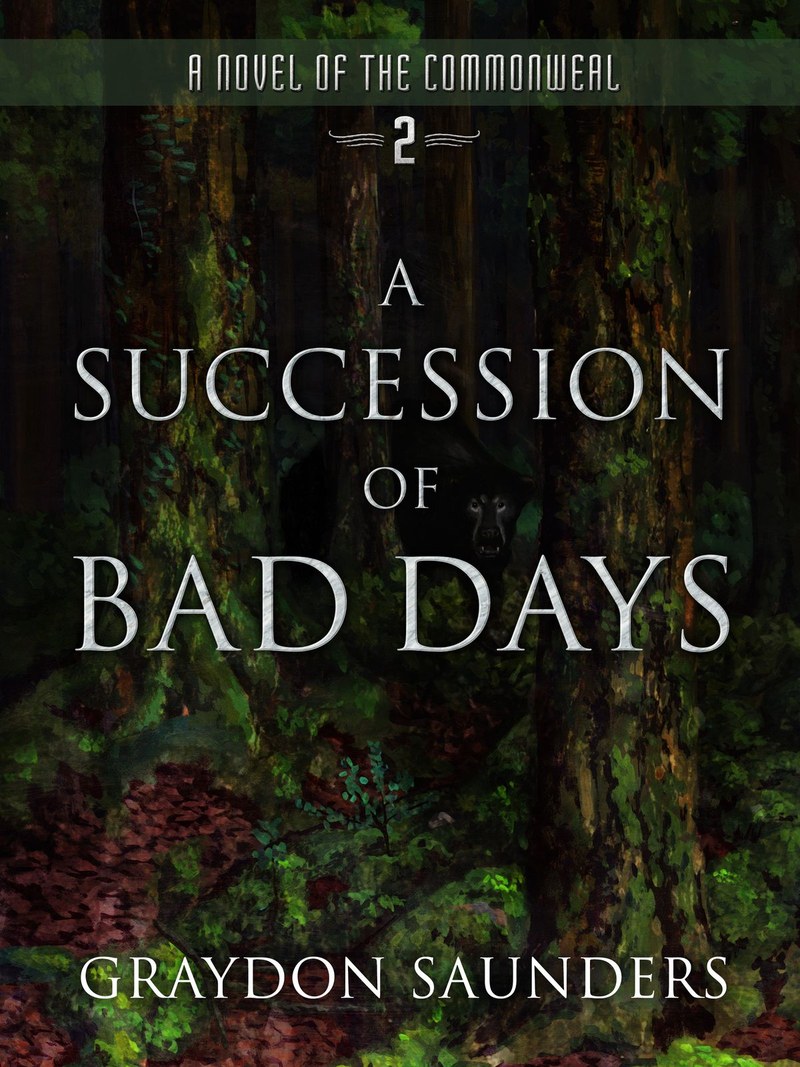
A Succession of Bad Days is Saunders’ take on wizard school. Given the centrality of magic to the setting of the Commonweal, wizard school should be fascinating and important. Unfortunately, this book smacks hard against not only the limits of Saunders’ idiosyncratic style, but also against something deep in the genre.
But first, the general review. After the events in The March North, five young people have been selected for an experimental new program of magical training. Mastering the Power in the world of the Commonweal typically has to be started when a person is very young, and due to various circumstances, all of the characters are at least 18. It’s a statistical certainty that if left to their own devices or started on the conventional curriculum, they’d be dead in a few years, a key fact which convinces the very cautious Commonweal ethical review board.
So our narrator, Edgar, along with old friend Dove (former Line sergeant) and new friends Zora and Chloris and Kyndfrid go under the not-so-gentle hands of Halt, Wake, and Blossom to learn how to do magic. While the standard method of sorcerous training involves learning delicate balances of the Power to avoid cooking your brain, the new method involves collectively working outside yourself. The Power is a metaphor for interacting with reality, and meta-reality, and also just thinking through physics. Edgar’s first trick is carrying objects by wrapping them in a “gravity sock” and lifting them around, starting with pails of water and moving up to whole buildings and thousand-ton chunks of rock.
A lot of the book is devoted to engineering. Hundreds of pages on how the group engineers their wizard school, which is sorcerously crafted by a fire elemental with some expected fine touches, like a domed ceiling with millions of stars made of precious metals showing the exact state of the sky at the moment the elemental was summoned, but also less standard features like quadruple-paned sapphire picture windows, portals between the toilets and the septic tank, and a basement full of pure titanium ingots. There’s a similarly lengthy chapter on building a canal. You know what you’re signing up for.
The second major thread is the human interactions between the students. They have a consonance with each other, a telepathic bond that lets them share power and speak in creepy unison. Edgar and Dove have more than consonance; they wind up sharing one metaphysical mind, which is the key learning of sorcery, and spend a lot of time cuddling with each other. This is described with a lot of intimacy and zero romance.
The main drama of the book centers around the dangers that the students present, closing with a “trial for your life” in front of the Commonweal Parliament. They’re powerful and useful. It’s revealed that the basic problem in the Commonweal is weeding, keeping farmland clear of various buried magically altered biological threats which can kill thousands of people in gruesome ways. Sterilizing land is easy; the Line can do that, but dirt melted into safe glass is useless for living on. Chloris, a necromancer, can reach out for thousands of square kilometers a day and precisely kill only the weeds, leaving the rest of the ecosystem in place. Zora is a life mage and powerful healer. Dove has the makings of a militant enchanter. And Edgar is one of whatever Halt is, and Halt scares everyone. And either by chance or new training methods, individually they’re top 10 most powerful wizards in the Commonweal, and collectively top 3. But they’re also raw, barely trained, barely constrained by the Shape of Peace, and for all of their good intentions, a nuclear bomb buried underneath the safety of the Commonweal.
The thing that knocks this down for me is that this is about Saunders’ vision of magic, which appears to be mostly about manipulating physical processes by will alone. It’s super cool to just think about things like anti-gravity, pulling landscapes from alternate pasts, using Maxwell’s Demon at scale to sort atoms into macroscale items, or violating thermodynamics to turn random chunks of air into lasers and then dump lethal waste heat into nearby lakes. The Commonweal has a surprisingly solid understanding of physics, for all they don’t seem to use gunpowder or electricity.
But there’s also another type of magic, which seems to work on some universal language, demarcated in funky gothic type